


The timing is not arbitrary. National Weather Service climate records for San Jose show that roughly eighty percent of the region’s annual rainfall lands between November and March, and a single atmospheric river event can push soil moisture past the threshold where compaction testing fails for weeks. Projects that pour footings in October and November typically keep their schedules intact through winter because framing, roofing, and interior trades can proceed under temporary weather protection once the structure is out of the ground. Projects that miss the window often lose six to ten weeks, not to rain itself but to the drying time the ground needs afterward.
Why the Ground Phase Drives the Whole Calendar
Every accessory dwelling unit, whether a detached backyard cottage in Willow Glen or a garage conversion in Santa Clara, depends on a sequence that starts in the dirt. Utility trenches must be cut, inspected, and backfilled. Building pads must be graded to drain away from both the new unit and the main house. Footings and slabs must be formed, inspected, and poured on soil that meets compaction requirements. None of those steps tolerate standing water, and most Bay Area cities will not schedule a footing inspection on ground an inspector cannot walk.
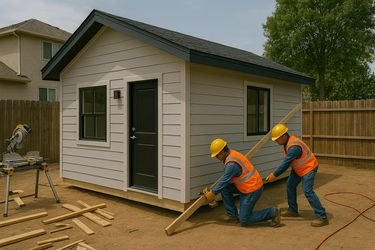
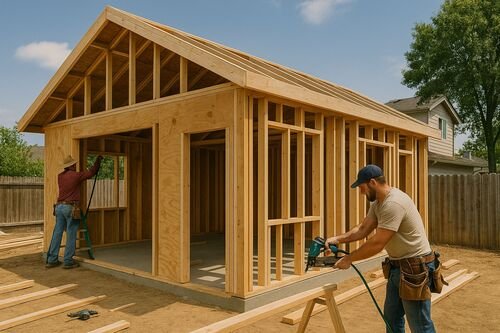
Once the slab cures and the frame goes vertical, the weather calculus changes completely. Framing crews work through light rain, roof underlayment and exterior wrap arrive within days of topping out, and from that point forward the project is effectively indoors. The company’s production records across more than a decade of Bay Area ADU work show that units weathered-in by mid-December finish on average within one week of their original schedule, while projects still at the grading stage when the first major storm arrives slip by a month or more in the majority of cases.
Homeowners researching builders this fall can review service details and recent project examples at adubuildersbayarea.com, where the company outlines its design, permitting, and construction process for detached units, attached additions, and conversions.
What the Scheduling Window Includes
The pre-rainy-season program is a sequencing commitment rather than a discount. Homeowners who sign construction agreements during October receive a reserved start date for site work within the company’s November and early December crew calendar, contingent on permit issuance. For projects still in plan check, the company coordinates directly with city staff in San Jose, Santa Clara, Sunnyvale, Mountain View, and other jurisdictions to track review timelines against the reserved slot, and it prepares trenching and grading submittals in parallel with architectural review so that ground work can begin the week permits are released.
Several practical measures travel with every winter-season start. Crews stage gravel access paths before heavy equipment arrives so that lawns and side yards survive the wet months. Excavations are cut and poured in tight cycles, often within the same week, to avoid open trenches collecting water. Stockpiled soil is covered, storm drain inlets are protected with fiber rolls as most Bay Area municipal codes require between October 1 and April 30, and erosion control plans are filed with grading permits rather than retrofitted after a complaint. These steps add modest cost and remove disproportionate risk.
Realistic Timelines for Projects Starting Now
A homeowner who begins feasibility and design in late October 2026 should expect schematic design through construction documents to take six to ten weeks depending on project complexity and how quickly decisions are made. Plan check in most South Bay cities currently runs four to eight weeks for a code-compliant ADU submittal, with state law requiring cities to act on complete ADU applications within sixty days. That places permit issuance for an October start in the late-winter window, which means site work begins as the rainy season tapers rather than as it peaks, and the unit finishes in late summer or early fall of 2027.
Homeowners who already hold permits, or whose projects are deep in plan check, are the primary audience for the current scheduling window. The company estimates it can take on a limited number of permitted projects for November ground-breaking before its winter crew calendar fills, and it encourages those households to schedule a site walk in the next two to three weeks.
“Every October we have the same conversation with homeowners who want to wait until spring because it feels safer,” said a company spokesperson for ADU Builders Bay Area. “The counterintuitive truth is that a foundation poured in early November on dry ground beats a foundation planned for March on ground that spent four months absorbing storms. The homeowners who move now are the ones hosting family in their finished unit by next Thanksgiving.”
Weather Protection as a Construction Standard
For projects that do carry framing into the wet months, the company applies a weather protection standard developed across hundreds of Bay Area winters. Floor sheathing is treated or covered within days of installation. Wall assemblies receive weather resistive barriers as sections complete rather than after the whole frame stands. Roof dry-in is sequenced as the single highest priority after framing inspection, and moisture readings are taken on framing lumber before insulation and drywall enclose it, a step that prevents the trapped-moisture problems that surface as mold complaints years later in less careful construction.
Interior phases are deliberately loaded into the deep winter. Electrical and plumbing rough-in, insulation, drywall, cabinetry, tile, and finish carpentry all proceed at full pace regardless of what the sky is doing, which is why a well-sequenced ADU started in autumn often finishes faster than an identical unit started in spring, when every builder in the region is competing for the same concrete crews and inspectors on the same sunny days.
Lessons From Last Winter’s Projects
The company points to its 2025-2026 winter season as evidence that the approach works. Of the detached units it broke ground on during last November’s dry stretch, every project reached roof dry-in before the late-December storm sequence, and interior trades worked without interruption through one of the wetter Januaries in recent memory. Two garage conversions started in the same period finished ahead of schedule entirely, since conversion work happens under an existing roof from day one, a reminder that conversions remain the most weather-proof ADU type a Bay Area homeowner can choose for a winter build.
By contrast, homeowners who contacted the company in February after their self-managed projects stalled told a consistent story: open excavations that flooded, compaction tests that failed repeatedly, rescheduled inspections, and idle deposits paid to trades who moved on to other work. Several of those projects ultimately restarted under the company’s management in late spring, finishing months later and costing more than they would have on a disciplined autumn start.
Drainage design also gets permanent attention during winter starts, not just temporary protection. Units built in the wet season are effectively stress-tested as they rise: crews observe exactly where water moves across the lot during real storms and adjust final grading, downspout routing, and French drain placement accordingly. More than one homeowner has ended up with a drier main-house backyard after an ADU project than before it, because the construction process surfaced and solved drainage problems the property had carried silently for decades.
The Broader 2026 Context
The scheduling announcement lands in a strong policy environment for Bay Area ADU construction. California’s accumulated ADU statutes guarantee ministerial approval for code-compliant units, cap most impact fees for units under 750 square feet, and require cities to process complete applications within sixty days. San Jose, which has permitted more ADUs than any other Bay Area city in recent years, continues to operate its streamlined ADU review track, and several South Bay jurisdictions now accept fully digital submittals that shave additional days off the front of the process.
Construction pricing has stabilized compared with the sharp escalation of earlier years. The company currently sees completed detached ADU costs in the greater San Jose area running from the high 200s for compact studio and one-bedroom units to the 400s for larger two-bedroom designs with premium finishes, with garage conversions typically landing well below detached new construction. Locking a construction agreement in the fall also locks current pricing against whatever the 2027 season brings, an underappreciated benefit of off-peak contracting.
How Homeowners Can Participate
Households interested in the pre-rainy-season window can request a property evaluation through the company’s website or by phone. The initial visit covers lot conditions, utility locations, setback constraints, and a candid discussion of budget and timeline. Permitted projects receive a construction start estimate within days of the walk-through; projects still in design receive a milestone schedule mapping design, plan check, and ground-breaking against the winter calendar. There is no charge for the initial consultation, and the company is direct with homeowners whose sites or budgets argue for waiting, a candor it considers cheaper for everyone than a stalled project.
Homeowners throughout San Jose, Santa Clara County, and the greater Bay Area who want their ADU out of the ground before the storms arrive are encouraged to contact ADU Builders Bay Area while November crew capacity remains open. The company provides guidance on feasibility, design, permitting, and construction scheduling, and its team matches project scope to the realities of each site and budget.
About ADU Builders Bay Area
ADU Builders Bay Area is a San Jose based accessory dwelling unit builder serving homeowners throughout the Bay Area. The company provides ADU design, planning, permitting, and construction services for detached ADUs, attached ADUs, garage conversions, junior ADUs, backyard cottages, in-law units, and custom secondary housing structures. Its work is centered on local expertise, efficient project delivery, and functional residential design for California homeowners.